

What Is Scent Marketing? The 2026 Guide
Scent marketing is the systematic design and distribution of fragrance across a business space, built to communicate brand identity and create a distinct memory association for customers. It differs from simply making a store smell pleasant in one critical respect: the scent is engineered to match the brand, the space, and customer behavior — not chosen because it happens to smell good. Businesses that take scent marketing seriously typically begin by developing a Signature Scent — a fragrance unique to them, not shared with competitors — and then select a diffusion system sized to the space, ranging from Standalone machines to HVAC Nano Scent systems that integrate directly with a building's air-conditioning.
This article answers the most fundamental questions about scent marketing in a single page — definition, sensory mechanism, machine selection, and budget. For a deeper look at measuring business impact, see our article on measuring scent marketing ROI. For a broader strategic overview, read the guide to building a scent marketing strategy.
Scent marketing defined — and how it differs from simply making a store smell nice
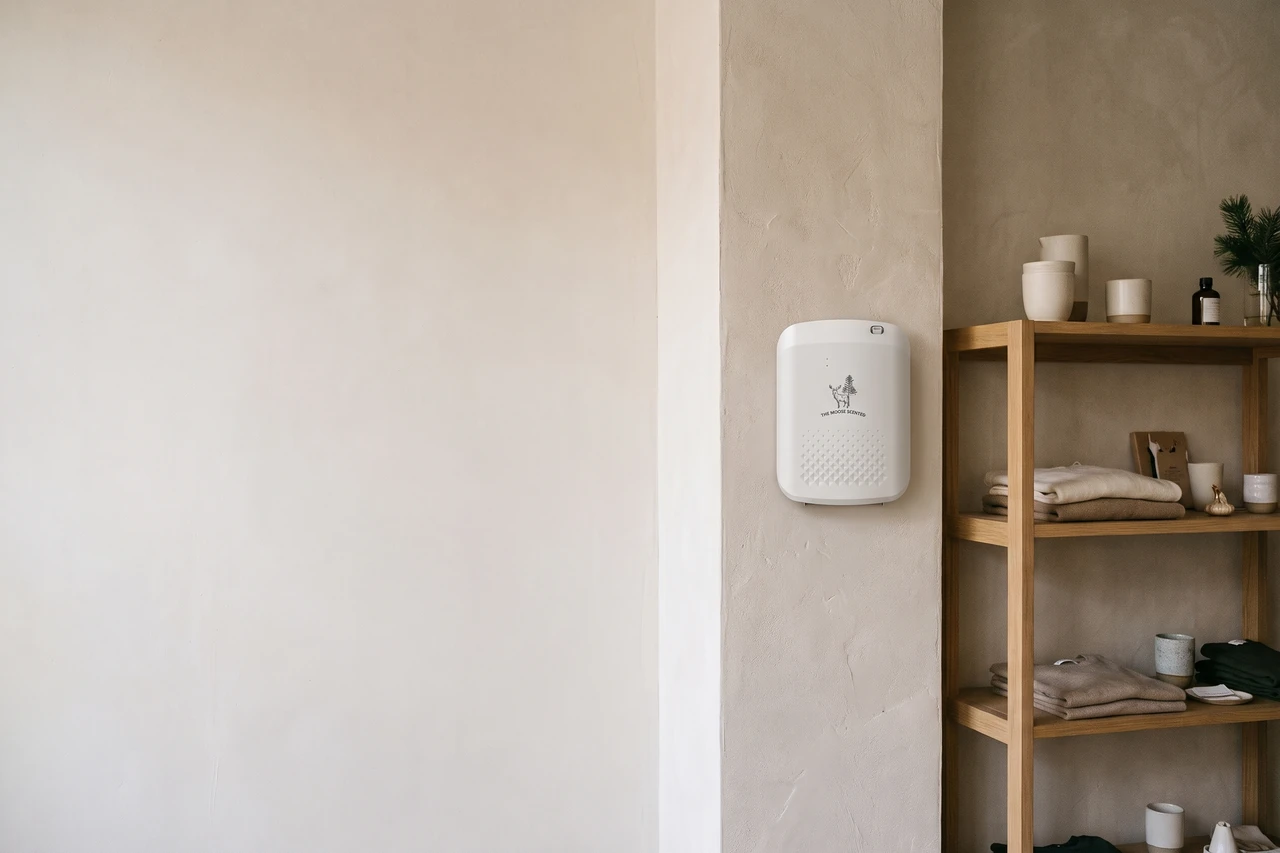
The most common misunderstanding is treating scent marketing as interchangeable with spraying air freshener or lighting a candle at the front desk. That solves an unpleasant odor problem, but it communicates nothing about the brand. Real scent marketing starts with a different question: what should this brand smell like — the same question already asked of its logo, its color palette, and the music playing in its space.
The distinction lies in intent and consistency. A scent used for marketing purposes must be dispersed at a constant concentration, switched on and off in line with operating hours, and kept identical across every location, so that customers come to associate that smell with the brand without consciously noticing it. This is why businesses such as automotive showrooms and hospitals rely on diffusion systems rather than leaving staff to light candles or spray fragrance by hand.
A scent used for marketing purposes must be dispersed at a constant concentration, so that customers come to associate it with the brand without consciously noticing it.
How scent reaches the brain and shapes decisions — sensory branding and the Proust effect

The idea behind scent marketing rests on a familiar explanation: the pathway that scent takes through the brain is often described as closely tied to the limbic system — the seat of emotion and memory — whereas sight or sound are commonly described as passing through several processing stages first. This phenomenon is often called the Proust effect, named for the French writer who described how the smell of a single pastry could pull an entire childhood back into focus in an instant.
The concept of sensory branding builds directly on this observation. If scent can summon memory faster and more deeply than other senses, then deliberately designing a brand's signature fragrance carries real potential to link a space with a positive emotional association. This is the mechanistic reason a growing number of businesses now treat scent as a brand element in its own right — no different in principle from a logo or a signature playlist.
What a business can actually do with scent and memory

What matters more than fragrance intensity is consistency of exposure. A memory that holds tends to come from repeated encounters in the same context, not from a single strong burst of scent. When a customer meets the same fragrance every time they enter a brand's space, the brain gradually links that scent to the brand's specific experience — until the scent itself becomes a cue that recalls the brand without needing an image or a sound to go with it.
In practice, this means keeping the scent identical every day and across every branch, and setting the on/off schedule to match actual opening hours, rather than chasing strength or novelty from one day to the next. Judging how well a chosen scent is working for a given business is better done by measuring continuously in your own space, which is covered in the measurement section below.
Scent marketing versus Signature Scent — and which approach suits which business

Scent marketing is the broad concept covering every use of fragrance for marketing purposes. A Signature Scent is the specific result a given business develops as its own brand fragrance. The relationship is similar to that between "branding" and "a logo" — one is the concept, the other is the tangible artifact.
Businesses with multiple locations, or those building recognition over the long term — automotive showrooms, clinic networks, multi-site retailers — tend to benefit most from investing in a Signature Scent, because an identical fragrance across every site reinforces brand identity. A business with a single location, or one looking for a simpler starting point, might begin with a ready-made fragrance suited to its atmosphere and develop a dedicated scent later. Moose & Pine blends every scent in-house from premium imported fragrance bases, which means a Signature Scent can be composed specifically for a brand from the outset — not selected from an existing catalog.
Choosing a scent that fits the brand and the customer — a four-step framework
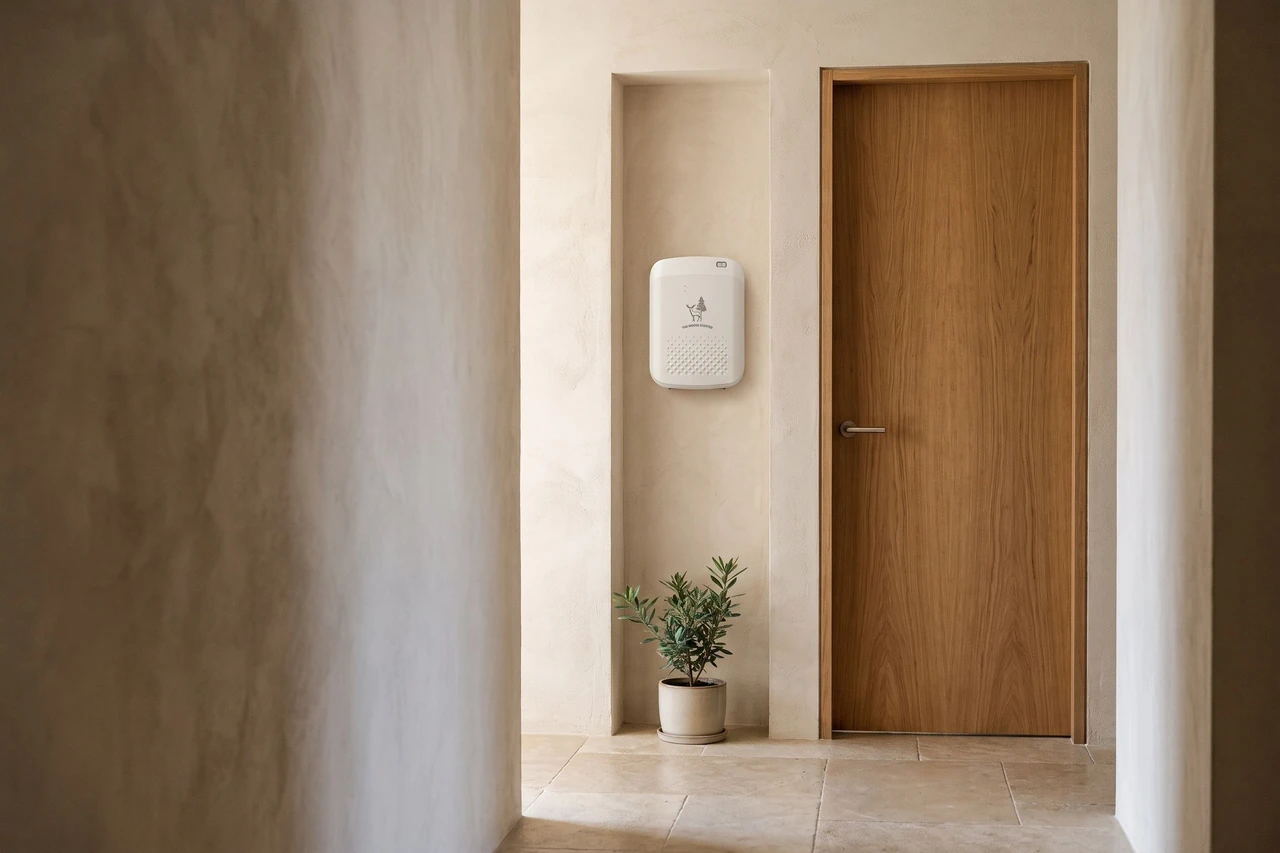
Choosing the "right" scent is not a matter of a business owner's personal taste; it is a process that deserves a systematic approach. The following four steps are a reasonable starting point for most businesses.
Step one — review the brand identity already in place: color, tone of voice, and target customer. The scent chosen should move in the same direction as these elements, not contradict the image the brand is trying to build.
Step two — consider the space itself and how customers use it. A space where customers linger, such as a hotel lobby, needs a scent that will not fatigue the senses over extended exposure — a very different requirement from a space customers pass through quickly, such as a restroom or a fitting room.
Step three — test in the actual space before committing long term. A scent that smells excellent in a sample room can feel entirely different once it meets the real temperature, humidity, and finishing materials of the space it is meant for.
Step four — decide between a ready-made scent and a dedicated Signature Scent, a decision best made together with a provider who understands both fragrance and business. Businesses still undecided can start with a scent consultation service to design a brand-specific Signature Scent, letting a team walk through the analysis from the first step.
Choosing a diffusion system: Standalone versus HVAC Nano Scent, and calculating machines per space
Diffusion systems fall into two main categories, based on how they are installed. Standalone machines operate independently, without connecting to a building's air-conditioning, and suit enclosed spaces from small to mid-sized that need flexible installation. HVAC Nano Scent connects directly to a building's air-conditioning system (AHU), suiting larger spaces where fragrance needs to reach evenly through existing ductwork.
Model selection should be based primarily on the size of the space. A business with several differently sized areas under one roof — a small reception room alongside a large entrance hall, for instance — may need more than one model working together. The most accurate way to calculate the number of machines required is to weigh floor area in square meters, ceiling height, and air circulation together. Businesses unsure which model to choose can use the machine-size calculator for a preliminary estimate before consulting the team directly.
Budget, safety and measurement — buy or rent, MSDS documentation, and the KPIs worth tracking
For most businesses, renting a machine monthly works out better than an outright purchase, since it removes the burden of maintenance and sourcing fragrance independently. The rental starts from 1,000 THB per month (excl. VAT).
- TMS150 — 1–20 sqm — 1,000 THB per machine per month (excl. VAT)
- TMS400 — 21–100 sqm — 2,500 THB per machine per month (excl. VAT)
- TMS800 — 101–500 sqm — 4,500 THB per machine per month (excl. VAT)
- TMS1000 — 501–800 sqm — 5,500 THB per machine per month (excl. VAT)
- HVAC Nano Scent — 800–5,000+ sqm — from 8,500 THB per month (excl. VAT)
The monthly package covers the following:
- the scent diffuser itself (no machine to buy)
- premium-grade fragrance from The Moose Scented
- automatic on/off scheduling set to your opening hours
- a monthly on-site refill visit by our staff (within the on-site service area)
- maintenance, and a replacement machine if a unit has a problem
- a usage data report (Data-Driven Report)
On safety: every fragrance used in the system comes with MSDS documentation from the base manufacturer — internationally recognized paperwork that sets out the composition and safety requirements of the substances used. Businesses that need this documentation for internal review should always request copies from the provider before installation.
As for measurement, since no standard figure applies across every business, the more practical approach is to set internal KPIs of your own: track customer feedback through surveys or reviews before and after installation, observe whether front-of-house staff notice customers asking about the scent more often, and compare usage data from the monthly Data-Driven Report against periods when other marketing activity is running in parallel.
Businesses that want the full picture before deciding can review all Moose & Pine services, from scent design to installation, or start with monthly diffuser rental, including monthly on-site refills and maintenance. To see which kinds of businesses have used the service, see case studies of a car showroom and a multi-branch cosmeceutical retailer, including Mercedes-Benz (Benz Phetcharat, Nakhon Pathom) and Dr.Pong (every branch).
Frequently Asked Questions
What is scent marketing?
Scent marketing is the systematic design and distribution of fragrance across a business space, aimed at communicating brand identity and creating a distinct memory association with customers. It differs from simply making a store smell pleasant in that the scent is deliberately chosen and dispersed to align with the brand, the space, and customer behavior — not just to mask an unpleasant odor. Businesses that take scent marketing seriously typically develop a dedicated Signature Scent and use a diffusion system that can precisely control concentration and operating schedule.
What's the difference between scent marketing and a Signature Scent?
Scent marketing is the broad concept covering every use of fragrance for marketing purposes. A Signature Scent is the specific fragrance a business develops for itself, distinct from competitors — comparable to the relationship between branding as a whole and a logo. Moose & Pine blends every scent in-house from premium imported fragrance bases, which means a Signature Scent can be composed specifically for a brand from the start, rather than chosen from an existing catalog.
Which kinds of businesses benefit most from scent marketing?
Businesses where customers spend extended time in-space, or multi-location businesses that need consistent brand identity — automotive showrooms, hotels, clinics, and retail chains — tend to see the clearest benefit, since an identical scent across every location reinforces brand recall. A single-location business can start just as well, beginning with a fragrance suited to its atmosphere before developing a dedicated scent later.
Standalone or HVAC Nano Scent — which diffusion system suits my space?
Standalone machines operate independently, without connecting to the building's air-conditioning, and suit enclosed spaces from small to mid-sized that need simple, flexible installation. HVAC Nano Scent connects directly to a building's air-conditioning system (AHU) and suits larger spaces of 800 square meters and above that need fragrance distributed evenly through existing ductwork. The choice should be based on the size of the space and the air-conditioning system already in place.
How many machines does a given floor area need, and how is that calculated?
The number of machines depends on floor area, the model chosen, and how air circulates through the space. As a general guide, the TMS150 suits 1–20 sqm, the TMS400 suits 21–100 sqm, the TMS800 suits 101–500 sqm, and the TMS1000 suits 501–800 sqm. Spaces larger than 800 sqm are typically better suited to an HVAC Nano Scent system designed for the specific site. Businesses unsure which to choose can use the machine-size calculator for a preliminary estimate.
How much does scent marketing cost — is buying or renting a machine better value?
The rental starts from 1,000 THB per month (excl. VAT) for the TMS150. Larger models scale up with the size of the space — the TMS800, for instance, is 4,500 THB per machine per month (excl. VAT) — and HVAC Nano Scent starts from 8,500 THB per month (excl. VAT). For most businesses, monthly rental works out better than an outright purchase, since it removes the burden of maintenance and sourcing fragrance independently — both of which the monthly package already covers.
Is the fragrance used in diffusion systems safe? What documentation should I ask for?
Every fragrance used in Moose & Pine's systems comes with MSDS documentation from the base manufacturer — standard paperwork that sets out the composition of the substances used and the safety requirements for their use. Businesses that need this documentation for internal review, such as hospitals or clinics, should always request copies from the provider before installation.
What KPIs can be used to measure scent marketing?
Since no standard figure applies across every business, the practical approach is to set internal KPIs of your own: track customer feedback through surveys or reviews before and after installation, observe whether customers ask staff about the scent more often, and compare usage data from the monthly Data-Driven Report against periods when other marketing activity is running in parallel.
Choosing the right scent and the right machine is easier with a second opinion from someone who works with both daily. Moose & Pine's team can walk through your space, your brand, and your budget together — the rental starts from 1,000 THB per month (excl. VAT). Get in touch to start the conversation, or go directly to monthly diffuser rental plans to see what fits.